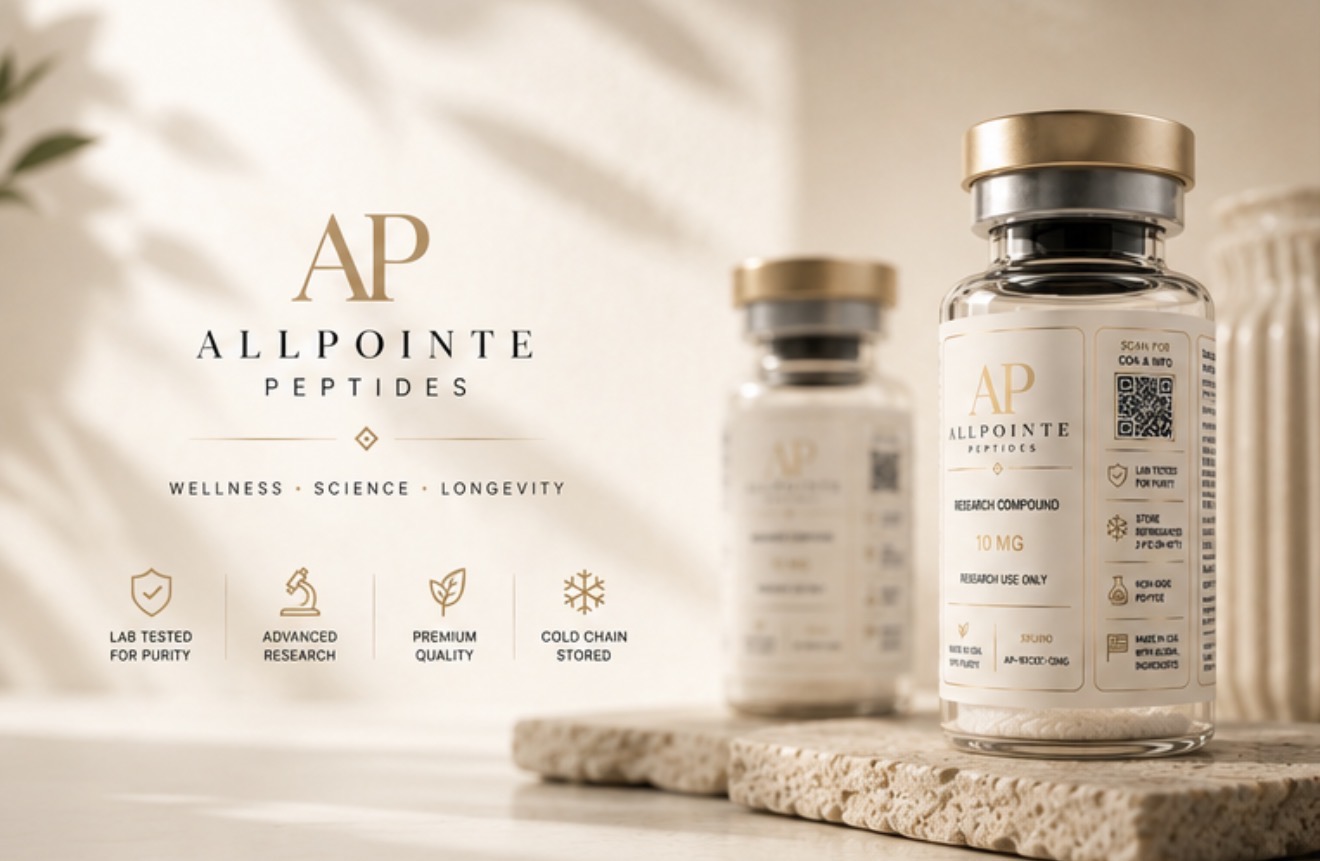
Independently Tested.
Exceptionally Pure.
- US-Manufactured Research Peptides
- Batch Tested Research Peptides
- Laboratory Grade Research Peptides
Best Sellers
View full catalog

Fewer peptides, chosen with care.
- 01
Curated, Not Comprehensive
A short catalog of well-studied peptides, chosen for research relevance over shelf-filling variety.
- 02
Built Around Research Pillars
Organized by the areas researchers actually work in — aging, endocrine, regenerative, metabolic, and dermatologic science.
- 03
Research-Grade Formats
Lyophilized and sealed for the bench, in the presentations laboratories reach for most.
- 04
What We Leave Out
If a peptide doesn't clear our bar for relevance and quality, it never makes the catalog.
Every number on the label — on the record.
- Purity
- HPLC analysis, characterized to the tenth of a percent.
- Identity
- Each lot confirmed against its expected reference profile.
- Endotoxin
- LAL-tested against a defined release limit per lot.
- On the Record
- Every result tied to its lot and available on request.
The certificate is the product.
Analytical documentation is the point, not an afterthought. For every released lot, the certificate of analysis ties the vial in your hand to a named, accredited laboratory and a specific tested run.
- Batch number tied to the tested run
- Independently characterized purity
- Test date and issuing laboratory
- Full report available for every released lot
- Peptide
- Representative sample
- Lot number
- AP-•••• (lot-specific)
- Chromatographic purity
- ≥ 99% · HPLC-UV/VIS
- Identity
- Confirmed to reference
- Endotoxin
- Within release limit · LAL
- Issuing laboratory
- Independent, accredited third party
Representative layout. Actual values are lot-specific and drawn from the released lot's signed analytical report.
What exactly is a peptide?
A quick, no-jargon primer on the science behind our catalog — what peptides are, how researchers study them, and why quality is inseparable from good data.
- What Are Peptides?
- Peptides are short chains of amino acids — the same building blocks that make up proteins, just smaller. Their defined sequence gives each one a specific structure studied in the lab.
- How They Work
- In research settings, peptides are examined as signaling molecules — how they bind to receptors and influence cellular communication across endocrine, metabolic, and regenerative pathways.
- Why Purity Matters
- Because peptides act with high specificity, the exact sequence and purity of a compound directly shape what a study observes. Characterized, lot-tested material keeps results interpretable.
- Research Use Only
- These are investigational compounds for laboratory and experimental research by qualified professionals. They are not supplements, drugs, or products for human or animal use.
See what the experts are saying.
Independent conversations on peptide science from leading researchers — plus a full library of channels and literature organized compound by compound. Shared for education; external sources, not affiliated with or endorsing Allpointe.
 Featured · Full episode(opens in a new tab)
Peptide & Hormone Therapies for Health, Performance & Longevity
Dr. Craig Koniver, MD
Performance medicine physician
Huberman Lab
 Full episode
Peptides: The Science, Uses & Safety
(opens in a new tab)Dr. Abud Bakri, MD
Internal medicine physician
Huberman Lab
 Full episode
Benefits & Risks of Peptide Therapeutics for Physical & Mental Health
(opens in a new tab)Dr. Andrew Huberman
Neuroscientist · Stanford School of Medicine
Huberman Lab
Read the documentation before you buy.
See the analysis behind every lot, then explore the catalog.