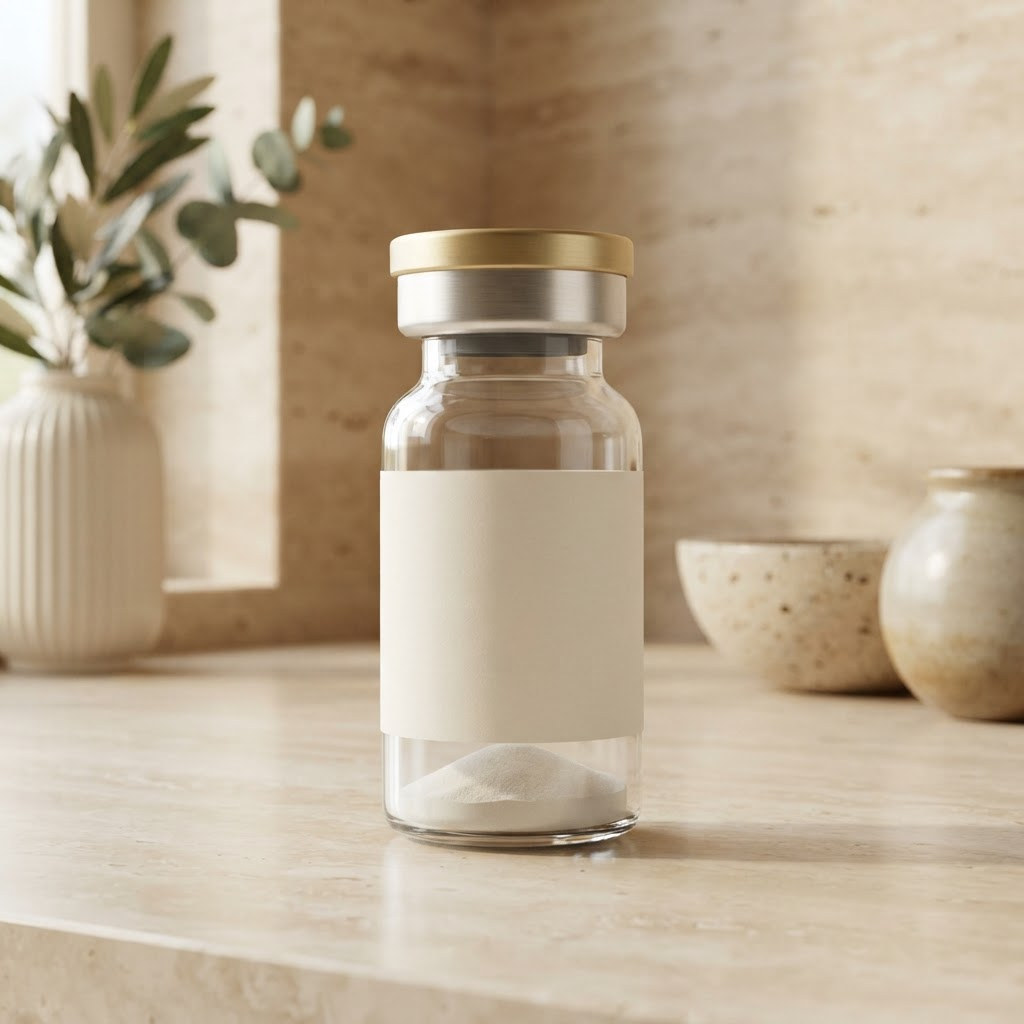
TB-500
Thymosin Beta-4 Fragment
- Form
- Lyophilized powder
- Storage
- -20°C (lyophilized)
- Origin
- USA lab
from$109
TB-500 is a synthetic peptide fragment used in laboratory investigations involving actin-related mechanisms, cellular migration, and peptide signaling.
- Cellular migration studies
- Angiogenic-signaling research models
- Actin-related laboratory investigations
SKU: AP-TB500-10MG
3 vial minimum per order — mix any products
Research Use Only
All products are intended solely for laboratory research and are not for human or animal consumption. By purchasing, the buyer agrees to use these products in compliance with all applicable laws.
Reconstitution ReferenceOptional — how strong is the mixed vial?
Mixing a powder vial with water? Fill in the fields — results update as you type.
Mixing 10 mg of peptide into 2 mL of water makes a 5 mg/mL solution. Each 0.1 mL contains 0.5 mg.
Reference for in-vitro laboratory handling only. Outputs describe the physical properties of the reconstituted vial (concentration and mass drawn) — they are not dosing guidance, administration instructions, or medical advice. Verify all measurements independently.
The science behind TB-500
A structured overview of the published preclinical and in-vitro literature surrounding TB-500 (Thymosin Beta-4) as a research compound.
TB-500 is a synthetic peptide corresponding to the actin-binding region of Thymosin Beta-4 (Tβ4), a naturally occurring 43-amino-acid peptide involved in cytoskeletal regulation. It is studied as a reference tool in cellular-migration and tissue-response research.
Within the peptide-research community, TB-500 / Tβ4 is one of the most-cited compounds in actin-regulation and regenerative literature, studied almost exclusively in preclinical and in-vitro systems.
The material supplied here is a laboratory reference standard, and the summaries below describe only findings reported in published research.
TB-500 research derives from decades of work on Thymosin Beta-4, first characterized as a major intracellular actin-sequestering peptide. The synthetic research compound is used to probe the actin-binding and cell-motility roles of this sequence.
The literature is predominantly rodent and in-vitro, examining cell migration, angiogenesis, and experimental tissue-repair models. Controlled human efficacy trials have not been completed.
The best-characterized mechanism is actin sequestration: Tβ4 binds monomeric G-actin and influences cytoskeletal dynamics, which researchers connect to cell migration in experimental systems.
Additional in-vitro work examines reported effects on angiogenic signaling and cell survival, framed as mechanistic observations within controlled laboratory settings.
Cell-migration models
Used to probe actin dynamics and directed cell movement in vitro.
Angiogenesis research
Examined in vascular models of new-vessel formation.
Tissue-repair systems
Referenced in preclinical models of experimental soft-tissue response.
Cardiac models
Explored in early preclinical cardiac-tissue research.
Corneal & dermal models
Studied in in-vitro epithelial-migration systems.
What is TB-500?
A synthetic peptide based on the actin-binding region of Thymosin Beta-4, supplied as a laboratory reference material for cell-migration and tissue-response research.
What kind of research references TB-500?
Predominantly preclinical and in-vitro studies of actin dynamics, cell migration, and angiogenesis. Controlled human trials have not been completed.
Is TB-500 approved for human or veterinary use?
No. TB-500 is not approved by the FDA or any regulatory authority for human or animal use. It is sold exclusively for in-vitro and laboratory research and is not for consumption.
How is the reference material characterized?
Each released lot is supplied as a lyophilized powder with a lot-specific certificate of analysis reporting HPLC purity of ≥ 99%. The certificate is tied to the specific released lot.
How should the compound be stored?
Lyophilized material is typically stored at -20°C, protected from light and moisture. Handling should follow standard laboratory practice for peptide reference materials. We do not provide reconstitution, dosing, or administration guidance.
- Goldstein AL, et al. Thymosin β4: a multifunctional regenerative peptide. Ann N Y Acad Sci (2012).
- Xu T-J, et al. Thymosin β4 and cell migration. (review).
Links open a curated peer-reviewed search on PubMed. Allpointe Bio Research is not affiliated with the cited authors or publishers.
Research-Use Statement
The information above is provided for educational and scientific-reference purposes only and summarizes findings reported in the published preclinical and in-vitro literature. It is not medical advice and does not describe outcomes, benefits, or applications for humans or animals. TB-500 is supplied strictly as a laboratory reference material for in-vitro and research use only — it is not a drug or supplement, is not approved for human or veterinary use, and is not for consumption. Allpointe Bio Research does not provide clinical, dosing, reconstitution, or administration guidance.